
The Book of Ephesians
SUBSCRIPTION LINKS
Apple Podcasts
RSS
YouTube Music
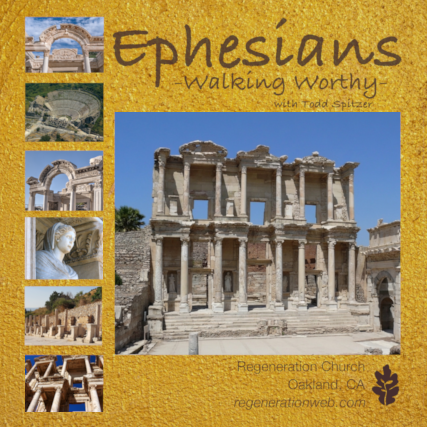
Ephesus was a leading center in the Roman Empire. Paul had spent a short time in Ephesus on his way back to Antioch from his second missionary journey (Acts 18:19-22). On his third missionary journey he stayed in Ephesus three years (Acts 20:31). On Paul's return to Jerusalem from his third missionary journey he gave a moving farewell address to the Ephesian elders at the coastal town of Miletus (20:13-35). That was his last time to see them (20:36-38), unless Paul visited Ephesus after he was in Rome (cf. 1 Tim. 1:3 with 3:14).
Though no particular problem is raised in the book, the reason for writing this epistle becomes clear when one considers the contacts the apostle had with the Ephesians. On the return from his third missionary journey Paul told the Ephesian elders at Miletus (a.d. 57) to beware of evil teachers from without and of professing believers within who would teach perverse things (Acts 20:29-30). From Revelation one can see that the Ephesian church had succeeded in keeping out the false teachers (Rev. 2:2) but had failed to maintain the vibrancy of their first love for Christ (Rev. 2:4). Thus the theme of love needed to be stressed for the saints at Ephesus.
Thus more than one-sixth of his references to "love" appear in this small epistle to the Ephesians. This letter begins with love (Eph. 1:4, 6) and ends with love (6:23-24). Also Ephesians teaches that Jewish and Gentile believers are one in Christ, which is demonstrated by their love for one another. This love can come only from God. Possibly Paul, realizing they were starting to forsake their first love, wrote this epistle to encourage them to love both God and their fellow saints.